

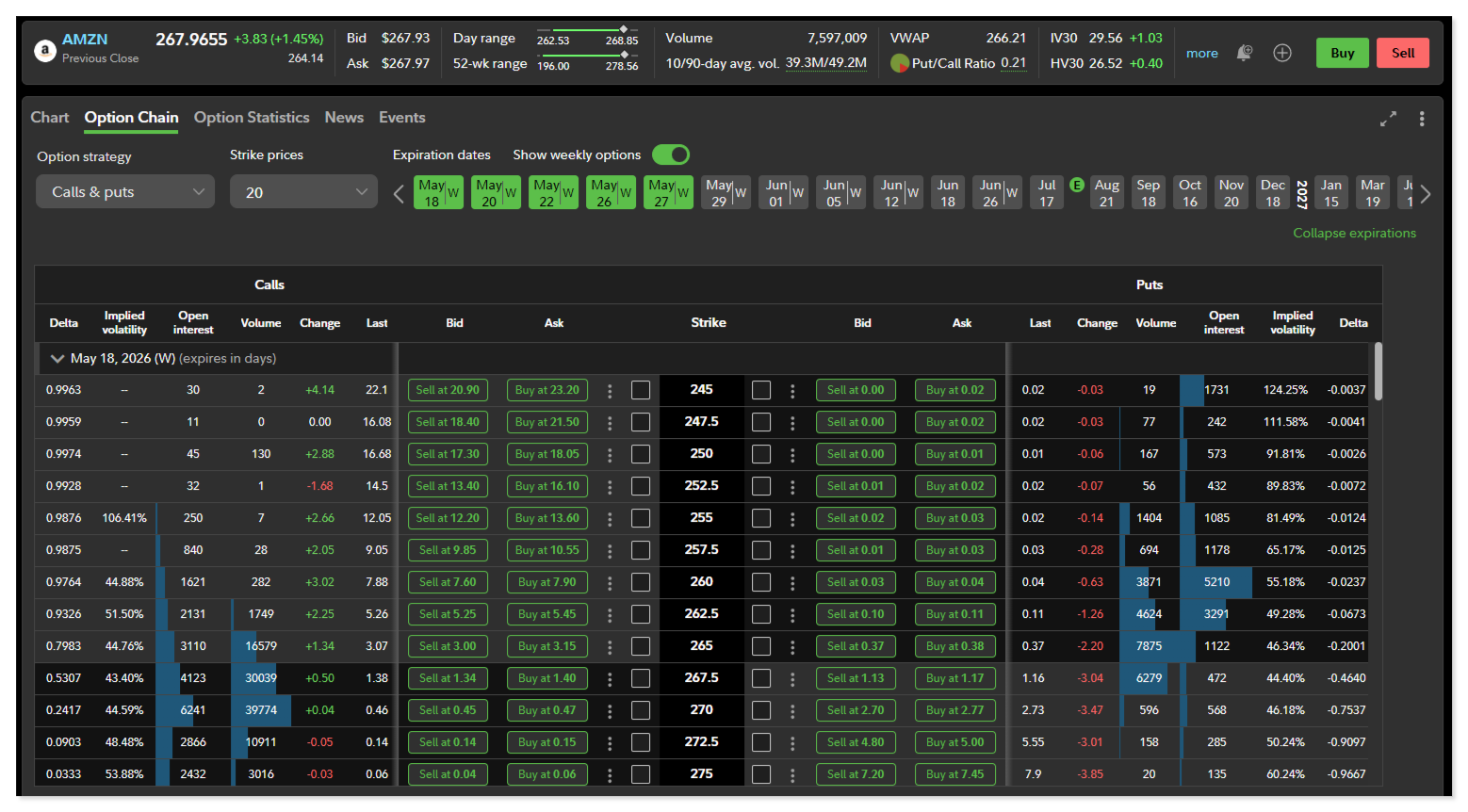
When you buy an options contract, the price you pay is called the premium. It looks like a single number on your screen, say, $4.20 per share. But that number has layers. Understanding what’s inside the premium tells you whether you’re overpaying, when to buy, and why your option sometimes loses value even when the stock moves in your direction.
Table of Contents
- What Is Options Premium?
- Intrinsic Value vs. Extrinsic Value
- What Drives Extrinsic Value?
- How Implied Volatility Affects Premium
- How Time Affects Premium (Theta)
- Why Your Option Can Lose Value When You’re Right
- Buying Premium vs. Selling Premium
- How to Assess Whether Premium Is Cheap or Expensive
- FAQ
What Is Options Premium?
The options premium is the price you pay to buy an options contract, quoted per share, but since each contract represents 100 shares, you multiply by 100 to get the actual cost.
A premium of $4.20 = $420 per contract
The premium is what you pay upfront, and it’s the maximum you can lose on the trade. Unlike buying a stock, there are no margin calls, no further liability, just the premium.
The premium you pay isn’t arbitrary. It’s set by the market based on several factors, primarily where the stock is relative to the strike price and how much uncertainty (volatility) exists about where it’ll be by expiration.
Intrinsic Value vs. Extrinsic Value
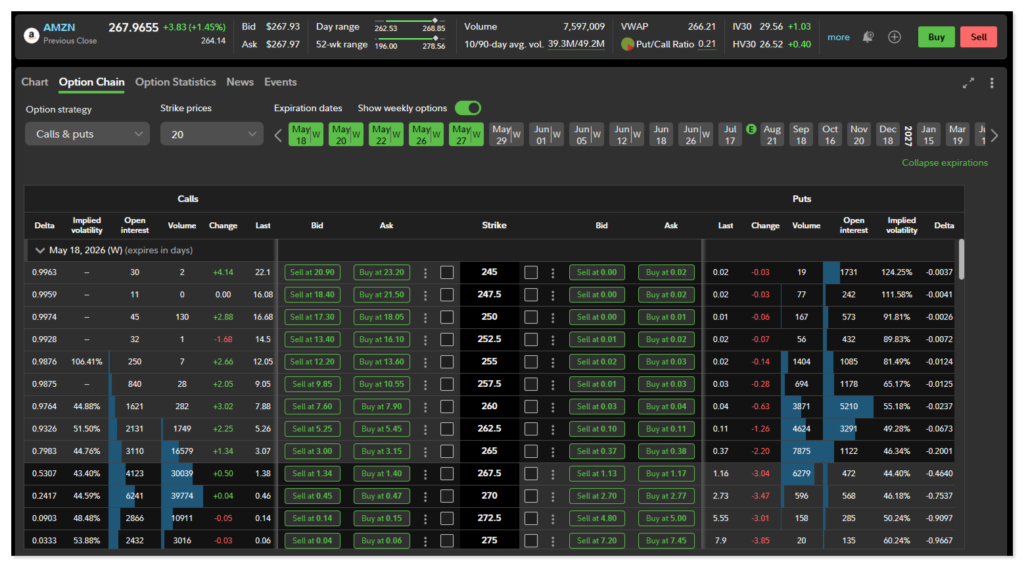
Every premium is made up of two components:
Intrinsic value is the real, immediate value of the option based on the current stock price vs. the strike price.
- For a call: intrinsic value = max(stock price − strike, 0)
- For a put: intrinsic value = max(strike − stock price, 0)
SPY at $541. $535 call premium = $9.00. Intrinsic value = $541 − $535 = $6.00
Extrinsic value (also called time value) is everything else, the portion of the premium that reflects time remaining, implied volatility, and the uncertainty of what the stock will do between now and expiration.
In the example above: $9.00 total − $6.00 intrinsic = $3.00 extrinsic value
Out-of-the-money options have zero intrinsic value. Their entire premium is extrinsic, you’re paying purely for the possibility that the stock moves far enough before expiration. This is why OTM options are cheaper, and why they carry higher risk: there’s no floor of real value. If the stock doesn’t move enough, the whole premium evaporates.
What Drives Extrinsic Value?
Three main forces determine how much extrinsic value is baked into a premium:
1. Time to expiration
More time = more premium. A 60-day option costs more than a 7-day option at the same strike, because there’s more opportunity for the stock to make a big move. This extra cost is the extrinsic value for that time.
As expiration approaches, this time value decays, this is theta. An OTM option with 60 days left might have $3.00 of extrinsic value. The same option with 5 days left might have $0.30.
2. Implied volatility (IV)
Implied volatility is the market’s expectation of how much the stock will move. High IV = expensive premiums. Low IV = cheap premiums.
Before earnings announcements, IV spikes because the stock might make a large move. After the earnings release, IV collapses, this is IV crush. If you buy a call before earnings and the stock rises 3% but IV drops from 60% to 30%, you can still lose money because the extrinsic value in your premium deflated.
3. Distance from the strike (moneyness)
ATM options have the most extrinsic value. Deep ITM options have high intrinsic value but little extrinsic. Deep OTM options have low extrinsic value because the probability of them reaching the strike is low, the market isn’t willing to pay much for the possibility.
How Implied Volatility Affects Premium
IV is the single biggest driver of whether premium is “cheap” or “expensive” at any given moment.
Think of IV as the price of uncertainty. When markets are calm and the stock is trending steadily, IV is low, premiums are cheap. When a catalyst is coming (earnings, Fed decision, CPI) or the market is volatile, IV rises, premiums get expensive fast.
The practical problem for buyers: IV often spikes right when you most want to buy options, at moments of fear or ahead of big events. You end up overpaying for premium that will collapse as soon as the uncertainty resolves.
IV rank is a metric many brokers show that compares current IV to its 52-week range. An IV rank of 80 means IV is in the 80th percentile of its range for the past year, expensive. An IV rank of 15 means IV is near the low end, options are relatively cheap.
As a buyer: look for low IV rank before entering. You’re buying volatility when it’s cheap.
As a seller: look for high IV rank before entering. You’re selling volatility when it’s expensive.
How Time Affects Premium (Theta)
Every day that passes, your option loses extrinsic value, even if the stock doesn’t move. This daily loss is theta.
Theta is not linear. It accelerates as expiration approaches:
| Days to Expiration | Theta Effect |
|---|---|
| 60 DTE | Slow, gradual decay |
| 30 DTE | Moderate |
| 14 DTE | Noticeable acceleration |
| 7 DTE | Fast, significant daily loss |
| 1–3 DTE | Very fast, most remaining extrinsic value gone |
An OTM option worth $1.50 with 30 DTE might lose $0.05 per day in the first two weeks. But in the final 5 days, it might lose $0.15–$0.25 per day as expiration approaches. The stock doesn’t move. You lose money anyway.
This is why holding losing options positions “hoping they recover” is so costly. Time is always working against the buyer. If you’re wrong on timing, you’re paying for that error in theta every single day.
Why Your Option Can Lose Value When You’re Right
This confuses beginners more than anything else in options. Here’s how it happens:
IV crush
You buy a call before earnings. The stock rises 4% on the report. But your call loses value. Why? Because IV was at 80% before earnings and dropped to 35% after the announcement. The collapse in IV destroyed the extrinsic value in your premium faster than the intrinsic value was created by the stock move.
Theta decay
You buy a call with 10 days left. The stock moves up slightly but not enough to offset the daily theta bleed. You’re right on direction, just not by enough, fast enough.
Wide bid-ask spread on entry
You pay the ask ($1.40) when the mid was $1.10. The stock moves up, but you’re selling at the bid ($1.25). The spread alone means you need a bigger move to profit.
All three of these can be avoided or managed with the right approach:
- Buy when IV is low (not before major events)
- Buy enough time to let the thesis play out (30–45 DTE minimum)
- Only trade liquid options with tight bid-ask spreads
Buying Premium vs. Selling Premium
There are two sides to every options trade: the buyer and the seller.
Buying premium (long options) means you pay the premium upfront. Theta works against you. You need the stock to move significantly before expiration. Your max loss is the premium; your max gain is large.
Selling premium (short options) means you collect the premium upfront. Theta works for you, every day the stock doesn’t move against you, you keep more of what you sold. Your max gain is the premium collected; your max loss can be larger (depends on the strategy).
Most beginner content focuses on buying premium. Selling premium has its own risk profile and is better suited for traders who understand the mechanics more deeply, but it’s worth knowing the other side exists and is where most professional traders spend most of their time.
How to Assess Whether Premium Is Cheap or Expensive
Before buying an option, ask three questions:
1. What is the current IV rank?
Below 30 = relatively cheap. Above 60 = relatively expensive. Buy when IV rank is low; be cautious above 60.
2. How much extrinsic value am I paying relative to intrinsic?
If you’re paying a $5.00 premium for a contract with $0.50 of intrinsic value, you’re paying $4.50 for time and volatility expectation. A large, fast move is needed just to justify that cost. Contrast with paying $5.00 for a contract with $4.00 of intrinsic, you’re paying $1.00 of time value on top of real value.
3. Is there a major catalyst coming?
If earnings, Fed, or CPI is within 5–7 days, IV is already elevated and pricing in the event. Buying here means you’re paying for uncertainty that will resolve (and deflate) quickly. If you want to trade the event, do it before IV spikes, or use a spread to offset the IV risk.
FAQ
What is options premium in simple terms?
It’s the price you pay to buy an options contract. Quoted per share, multiply by 100 for the total cost. It’s also your maximum possible loss, you can’t lose more than the premium you paid.
Why does options premium change even when the stock price doesn’t move?
Because premium includes extrinsic value, which is driven by time remaining (theta) and implied volatility (IV). As time passes, theta erodes extrinsic value daily. If IV drops, extrinsic value drops too, even without any stock movement.
What is a high premium vs. a low premium?
It depends on context. A high premium can mean the option is deep ITM (high intrinsic value) or that IV is elevated. A low premium can mean the option is OTM or that IV is historically low. Compare premiums using IV rank, not just the dollar amount.
Is a lower premium always better?
No. Lower premium usually means the option is OTM and needs a large move to profit. The risk/reward is often worse on cheap OTM options, not better. Paying more for an ATM or slightly OTM option with a realistic chance of profiting is often better value.
What happens to premium at expiration?
All extrinsic value goes to zero at expiration. Only intrinsic value remains. An ITM option at expiration is worth exactly the intrinsic value. An OTM option at expiration is worth zero. This is why you should close most options before expiration, you’re usually better served by selling extrinsic value while it still exists.
What does it mean to “sell premium”?
Selling an options contract (as the seller/writer) means you collect the premium upfront. You’re on the other side of the buyer’s trade. Theta works in your favor, every day closer to expiration with the stock not moving against you, the premium you sold decays. Strategies like covered calls and cash-secured puts involve selling premium.
The Bottom Line
The premium isn’t just a price tag, it’s a composition of intrinsic value, time value, and volatility expectation. Understanding what drives each component tells you whether you’re paying fair value, overpaying into an IV spike, or buying a cheap option that’s cheap for a reason.
The most consistent beginner mistake is buying options when premium is expensive (high IV) and close to expiration (high theta). Trade those two variables in your favor, low IV, enough time, and you improve your odds significantly before the stock even moves.
See live GEX levels and market structure before your next options trade on SweepAlgo →
Disclaimer: This content is for educational purposes only and does not constitute financial advice. Options trading involves substantial risk of loss and is not appropriate for all investors.